
Waste Systems
Over 65% of waste is diverted from the landfill, including 1,500+ tons recovered for reuse annually
Stanford is advancing its 2035 zero waste goals by strengthening systems that reduce landfill disposal and support a more circular campus economy. The university aims to divert 90% of waste through reuse, recycling, and composting and to reduce total per-capita waste by 10% in areas under Stanford’s operational control by 2035. Stanford is scaling infrastructure, education, and regulatory alignment to accelerate progress towards these targets.
Waste emissions account for less than 1% of Stanford’s Scope 3 emissions. Although waste is not Stanford’s largest emissions source, reducing landfill disposal lowers methane emissions and supports climate justice. Programs that increase reuse and recovery keep material in circulation longer, lowering the need for new purchases and reducing upstream production emissions. Food recovery and material reuse also reduce the burden of waste handling on communities that host processing and disposal facilities. At the same time, these programs return value locally by providing usable goods and meals to nearby partners and residents.
Ongoing challenges include contamination in the landfill waste stream, specialized waste from labs and construction, inconsistent behavior across campus, and historically supported consumption culture. Continued investment in data-driven programming, standardized systems, and community engagement will be critical to closing the remaining gap to zero waste by 2035.
Data Reveals Wasteless Opportunities
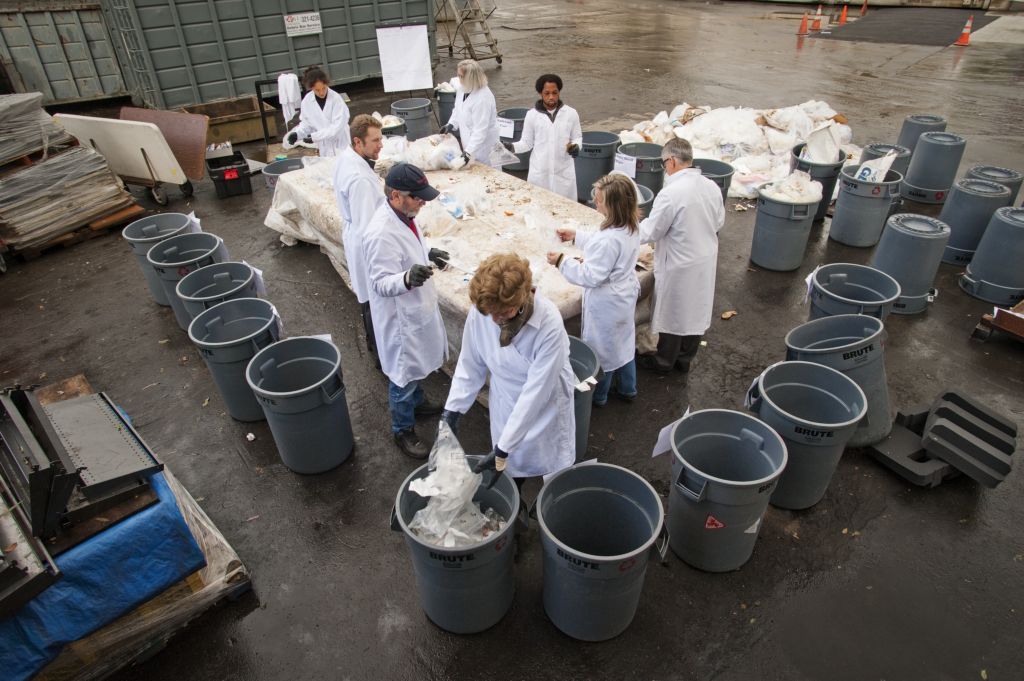
Gathering data is the first step in creating a wasteless community. That’s why Stanford conducts regular trash audits of its buildings to gain insight into the types and volume of waste generated on campus. Students and staff meticulously hand-sort materials into dozens of categories to identify what is being mis-sorted. These audits inform the playbook for achieving the university’s zero waste targets.
In 2025, Stanford conducted its first-ever, campus-wide audit of the recycling and composting streams—an important milestone in its sustainability efforts. These targeted audits reflect Stanford’s commitment not only to reducing landfill-bound material, but to identifying upstream opportunities to prevent waste in the first place, even if the materials are recyclable or compostable.