
Food Systems
Plant-forward dining and sustainable sourcing anchor Stanford’s approach to reducing food system emissions
Stanford’s food system includes self-operated, student-managed, and contracted food service operations spanning the main campus. Together, these programs contribute to Scope 3 emissions through food purchasing, preparation, and waste. Leveraging its purchasing power and living-lab model, Residential & Dining Enterprises (R&DE) – Stanford Dining, a self-operated food service provider for student meals, advances plant-forward dining, sustainable sourcing, and equitable procurement practices that reduce emissions, elevate culinary quality, and strengthen the student experience and community well-being.
R&DE Stanford Dining is nationally recognized for innovative culinary leadership—including majority plant-based menus—Smart Catch Ambassador status for sustainable seafood, and co-founding the Menus of Change University Research Collaborative.
Current priorities include improving supplier data, expanding food literacy programs to shift demand, maintaining affordability and dining excellence, and implementing consistent systems to measure food-related emissions across all dining operations. Ongoing collaboration across departments and academic partners remains essential to building a more sustainable, equitable, and resilient campus food system.
Climate Action Through Everyday Food Choices
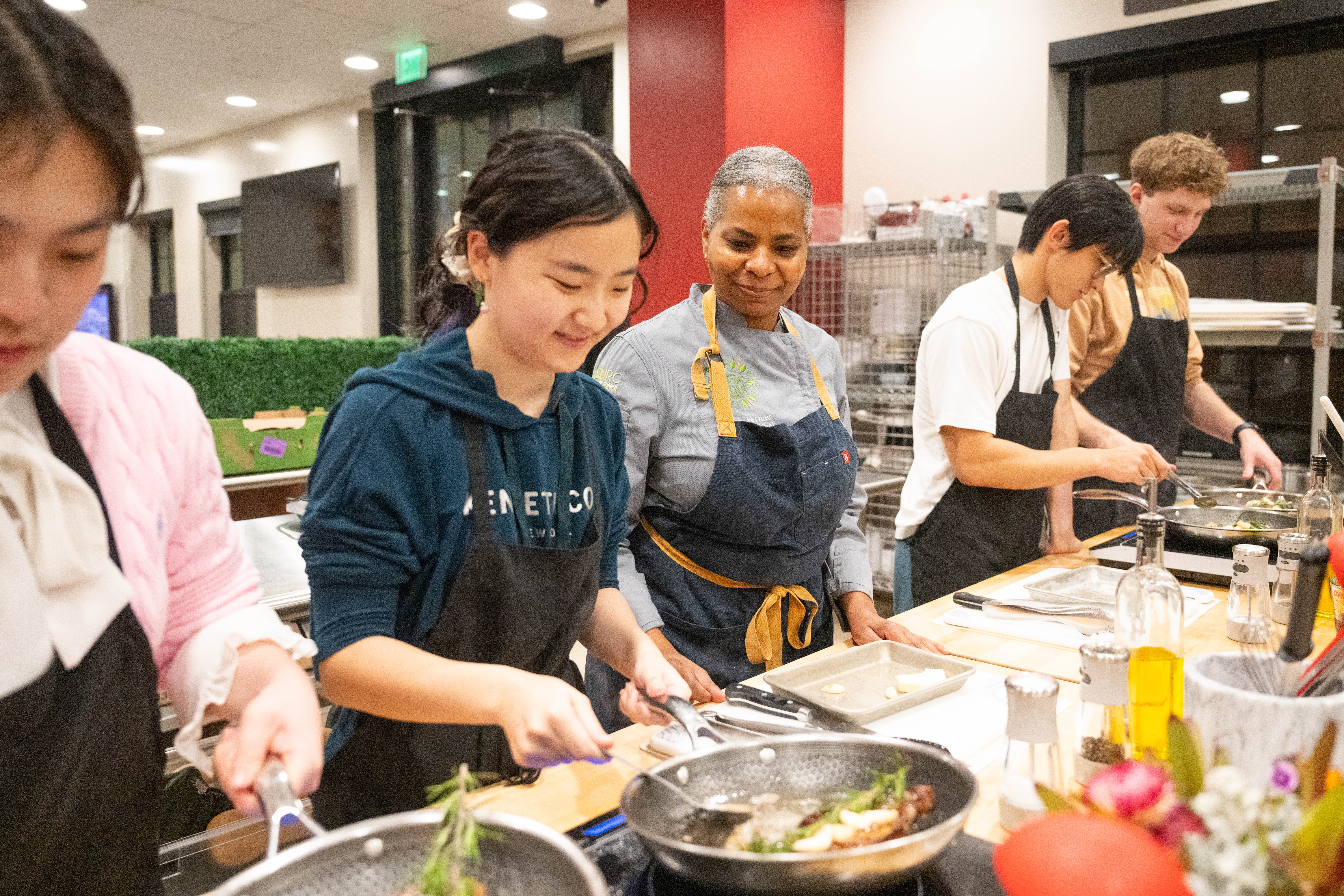
Residential & Dining Enterprises (R&DE) is advancing climate action where daily habits take shape: the kitchen.
The R&DE Teaching Kitchen is a hands-on learning environment that equips students with practical skills in plant-forward cooking, sustainable meal planning, and food waste prevention. As part of R&DE’s broader commitment to sustainable food systems, the Teaching Kitchen also serves as a collaborative platform that brings together faculty partners, the O’Donohue Family Stanford Education Farm, and academic programs.
Through this interdisciplinary model, R&DE connects culinary skill-building to research, nutrition science, and broad food-systems learning. More than 5,000 students, along with thousands of faculty and staff, have participated in this living-lab experience, gaining tools to make more sustainable food choices and strengthening habits that support both personal well-being and planetary health.