
Energy Systems
82% reduction in Scope 1 & 2 emissions from 2011 peak, driven primarily from Stanford’s energy systems
Stanford’s Central Energy Facility (CEF) provides chilled and hot water to campus buildings through a heat recovery system that captures waste heat from chilled water to meet up to 88% of campus heating needs. The facility is predominantly run on electricity, using natural gas only when recovered heat is insufficient in the peak of winter. Large thermal storage tanks help balance energy use throughout the day and improve efficiency.
Stanford purchases renewable electricity credits to to achieve 100% renewable electricity through long-term solar power purchase agreements, rooftop solar systems, and renewable energy credits.
To further mitigate emissions, Stanford is enhancing its energy infrastructure by expanding the Central Energy Facility that will increase the CEF’s ability to take on additional loads, grid and transmission upgrades that will support additional electrification and reliability, and innovations in energy storage and load flexibility.
Electrifying the Farm
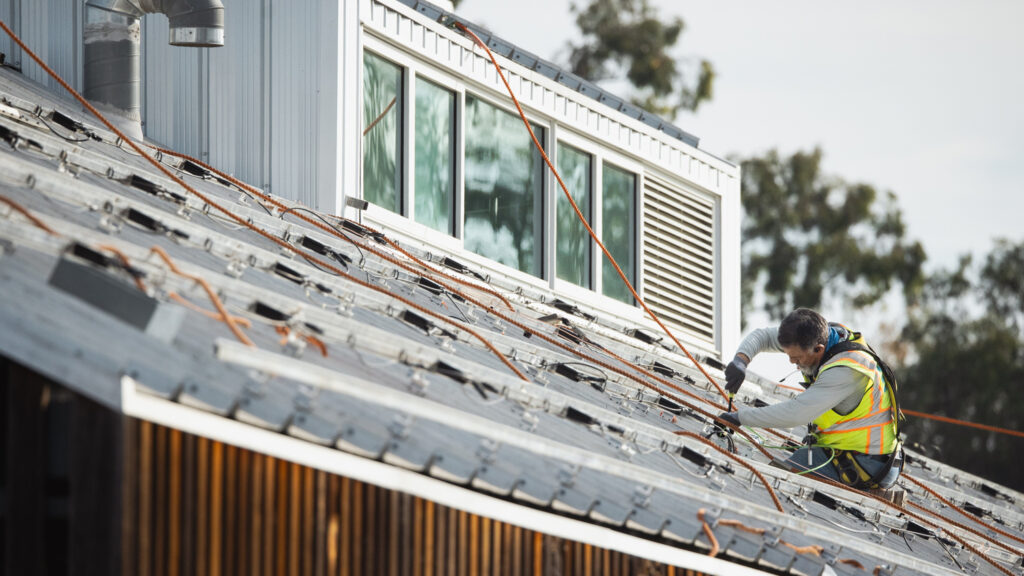
A new solar-powered microgrid—including solar panels, EV chargers, and battery storage—at the O’Donohue Family Stanford Educational Farm meets onsite energy needs while providing students with hands-on experience in agroecology, energy systems, and the clean-energy transition.