Thank you for being Power Smart this week from 2-6 P.M.
The campus electric load is forecasted to exceed 80% capacity each day this week. Please reduce electricity from 2 to 6 p.m. this week to protect our overall campus power supply. (sustainable.stanford.edu/power-smart)
Just as water and energy flow through pipes and transmission lines, materials flow through a system of standardized waste infrastructure within buildings. Establishing waste standards is key to creating a wasteless community.
Designed for Behavior Change
Waste system standards are essential for creating and maintaining the infrastructure that supports the university’s journey toward zero waste.
Stanford’s waste system standards are designed to provide convenient access to recycling and composting and to encourage waste reduction and proper waste sorting. Together, these standards streamline the sorting process and encourage positive behavior change, making it easier for our community to contribute to a sustainable campus.
Stanford’s Facilities Design Guidelines outline the campus standards for waste infrastructure and provide guidance for new construction and remodeling to ensure compliance with state laws related to waste management.
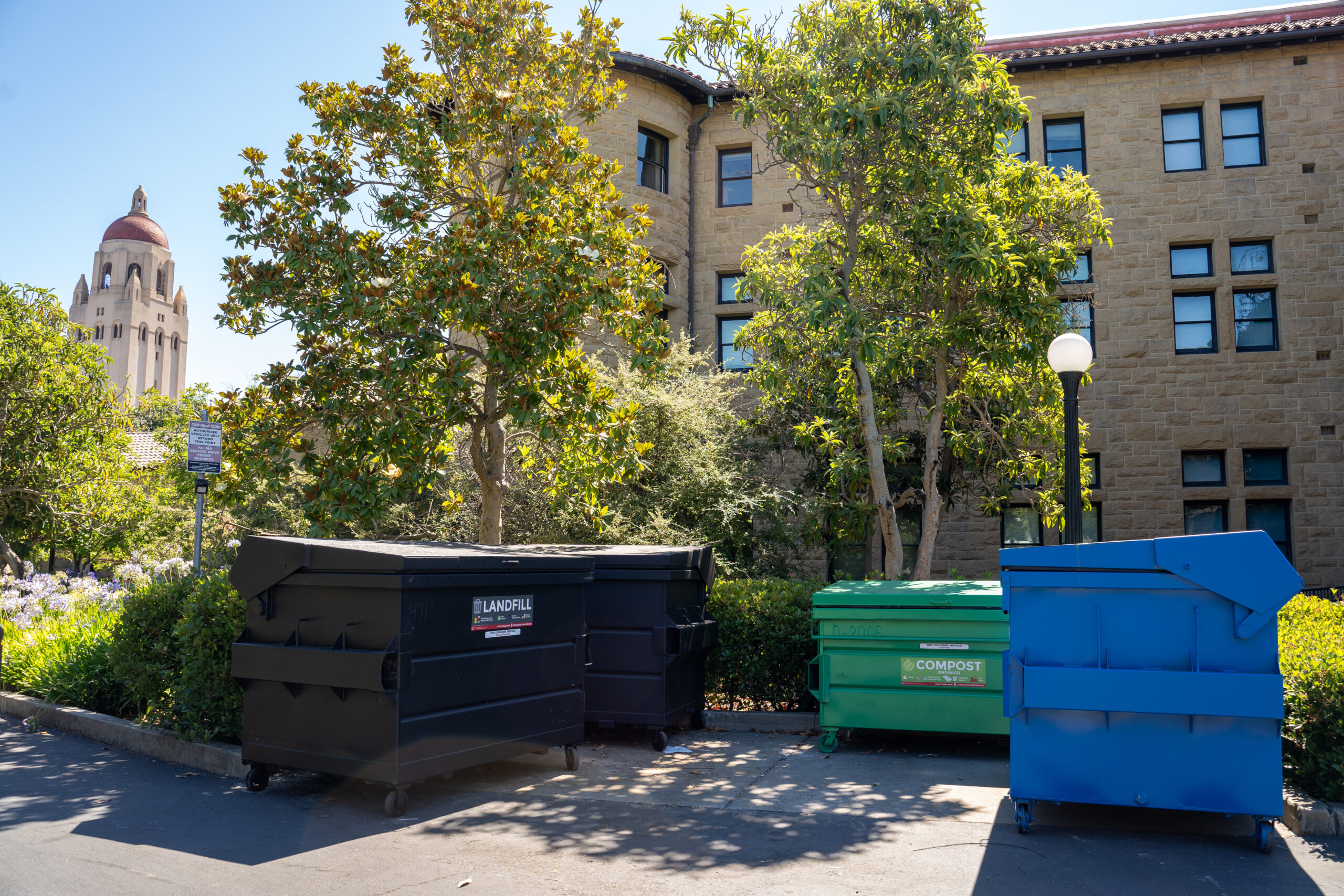
Recycling, compost, and landfill bins are provided to students who are required to service their bins at the waste enclosures.Recycling and landfill bins provided in labs and serviced daily by custodians.Shared waste stations are provided throughout campus to provide equal and convenient access to recycling and composting. In the majority of academic buildings on campus, individuals are responsible for bringing personal waste to a shared waste station in a common area. Waste is not picked up from individual offices. Custodians service the shared waste stations daily. Blue liners are used for recycling, green compostable liners are used for compost, and clear liners are used for the landfill stream.Waste enclosures require adequate space for equal and visible access to recycling, compost, and landfill dumpsters.Public waste stations are strategically located throughout campus near cafes and other high-traffic areas to increase access to recycling and composting. Stanford provides labeled and color-coded bins and signs for campus events.