
Refrigerants & Research Gases
Refrigerant destruction, lead reduction, and low-GWP alternatives anchor Stanford’s opportunities to further reduce process and fugitive emissions
Refrigerants and research gases, reported as Scope 1 process and fugitive emissions, are among the most potent greenhouse gases used on campus, with global warming potentials (GWP) thousands of times higher than carbon dioxide. These emissions account for approximately 20% of Stanford’s combined Scope 1 and 2 emissions and largely originate from HVAC systems, chillers, refrigeration equipment, and specialized research processes. As other emissions sources decline, refrigerants and research gases are expected to represent a growing share of unavoidable emissions in Stanford’s remaining operational footprint.
Managing these emissions is complex. Equipment is distributed across many buildings and departments, and in some research applications, there are limited viable low-GWP alternatives. Replacement is not always beneficial when life cycle impacts and system compatibility are considered. Stanford has made significant progress through annual emissions tracking using The Climate Registry methodologies, a plug load study that inventoried refrigerant-containing equipment, and an annual financial transaction analysis that reviewed hundreds of thousands of purchasing records to uncover data gaps and improve tracking accuracy.
State and federal policies, including California regulations and the AIM Act, are accelerating the phaseout of high-GWP refrigerants. Stanford is responding by advancing leak detection, reporting, using lower-GWP refrigerants and gases when possible, and targeting abatement strategies to reduce emissions while supporting critical operations and research.
Chilling Out: Stanford’s Rebate Program for Efficient Freezers
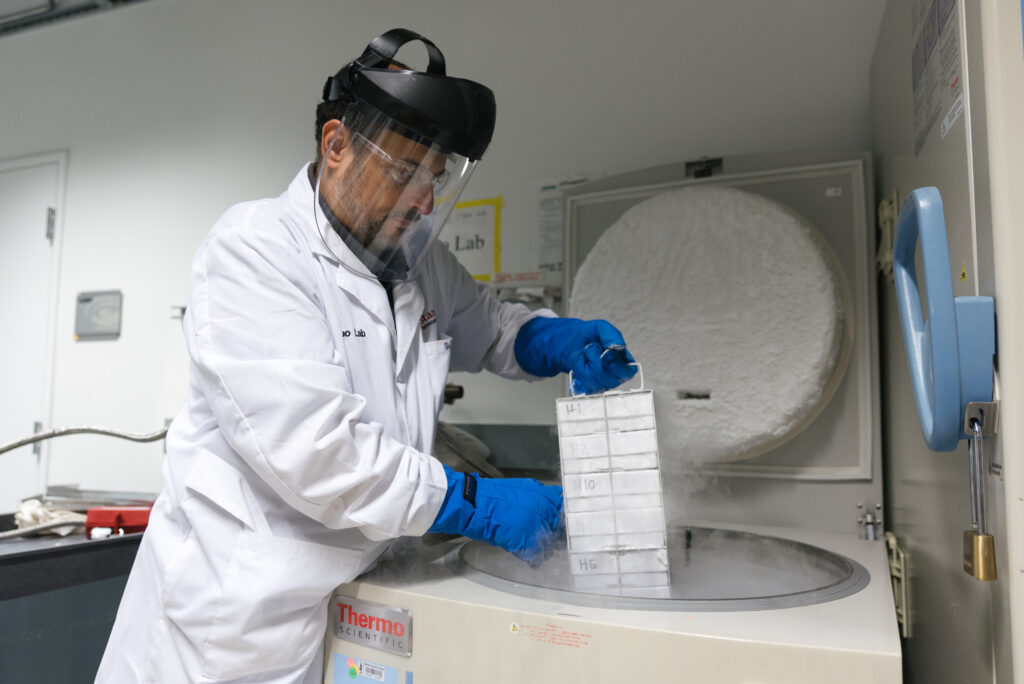
Stanford’s ENERGY STAR ultra-low temperature (ULT) freezer rebate program helps labs reduce energy and climate impact by incentivizing ENERGY STAR certified freezers that use low-GWP refrigerants. Combined with maintenance resources that help labs monitor and repair refrigerant leaks, the rebate program reduces emissions from laboratory equipment while lowering operating costs and advancing a more sustainable research environment.