Food Systems

Plant-forward dining and sustainable sourcing anchor Stanford’s approach to reducing food system emissions

Stanford’s food system includes self-operated, student-managed, and contracted food service operations spanning the main campus. Together, these programs contribute to Scope 3 emissions through food purchasing, preparation, and waste. Leveraging its purchasing power and living-lab model, Residential & Dining Enterprises (R&DE) – Stanford Dining, a self-operated food service provider for student meals, advances plant-forward dining, sustainable sourcing, and equitable procurement practices that reduce emissions, elevate culinary quality, and strengthen the student experience and community well-being.

R&DE Stanford Dining is nationally recognized for innovative culinary leadership—including majority plant-based menus—Smart Catch Ambassador status for sustainable seafood, and co-founding the Menus of Change University Research Collaborative.

Current priorities include improving supplier data, expanding food literacy programs to shift demand, maintaining affordability and dining excellence, and implementing consistent systems to measure food-related emissions across all dining operations. Ongoing collaboration across departments and academic partners remains essential to building a more sustainable, equitable, and resilient campus food system.

Stanford Dining’s “One Plate, One Planet” program is built on a comprehensive sustainability strategy with six pillars: climate-smart dining, racial equity, deforestation prevention, thriving oceans, circular economy, and systems thinking. Annual Earth Month events and a strong focus on student engagement make this one of the nation’s most recognized sustainable food programs, embedding sustainability into every aspect of campus dining.

Mitigation
ongoing

Stanford Dining has adopted Menus of Change principles and achieved 64% vegan and 86% vegetarian menu items, earning national recognition for sustainable procurement and waste programs. Campus chefs partner with world-renowned experts to create globally inspired, plant-forward menus and innovative menu design to accelerate adoption of climate-smart dining practices.

Mitigation
ongoing

Stanford Dining co-founded and leads the Menus of Change University Research Collaborative, piloting behavioral interventions such as menu design, portioning, and marketing to encourage sustainable food choices. The university also publishes the Food Choice Architecture Playbook and shares findings with peer institutions, scaling the impact of evidence-based strategies that shift campus dining toward healthier, lower-impact options.

Mitigation
ongoing

Stanford Dining collaborates with the Monterey Bay Aquarium to guide campus seafood sourcing, earning the Smart Catch Ambassador Award for sourcing only top-rated, sustainable seafood. Ongoing research and student engagement projects advance sustainable seafood practices, ensuring campus dining supports healthy oceans and maintains industry leadership in responsible procurement.

Mitigation
ongoing

The O’Donohue Family Stanford Educational Farm serves as a living classroom for regenerative agriculture, providing hands-on learning, hosting workshops, and supplying produce for campus dining, while advancing food justice and community engagement.

Mitigation
ongoing

Stanford brings together the BeWell Community Gardens and the Muwekma Native Plants Garden to provide students, staff, and faculty with hands-on opportunities to practice agroecology, learn about sustainable food systems, and engage with Indigenous-led horticultural traditions. These on-campus spaces foster food literacy, community resilience, and stewardship, while honoring and preserving traditional ecological knowledge through collaborative workshops, community events, and partnerships with the Muwekma Ohlone Tribe. This knowledge strengthens community resilience by fostering local food sovereignty, reducing reliance on external food systems, and cultivating networks of mutual support that can adapt to environmental and economic disruptions.

Resilience
ongoing

Stanford Dining develops direct supplier relationships that support inclusive, small-scale coalitions of farmers who adopt innovative and sustainable practices, expanding Stanford’s current support for underrepresented producers and strengthening the university’s commitment to ethical supply chains. These efforts reduce vulnerability to global supply disruptions, foster regional self-reliance, and strengthen the adaptive capacity of communities to respond to environmental and economic challenges.

Resilience
ongoing
ongoing

Stanford reviews food contracts for opportunities to incorporate language that advances climate-smart dining and sustainable food system strategies at renewal or negotiation. The university is also updating its supplier code of conduct to emphasize responsible procurement principles and climate targets, strengthening expectations for sustainable food sourcing and ethical supply chains.

Mitigation
in-progress

Climate Action Through Everyday Food Choices
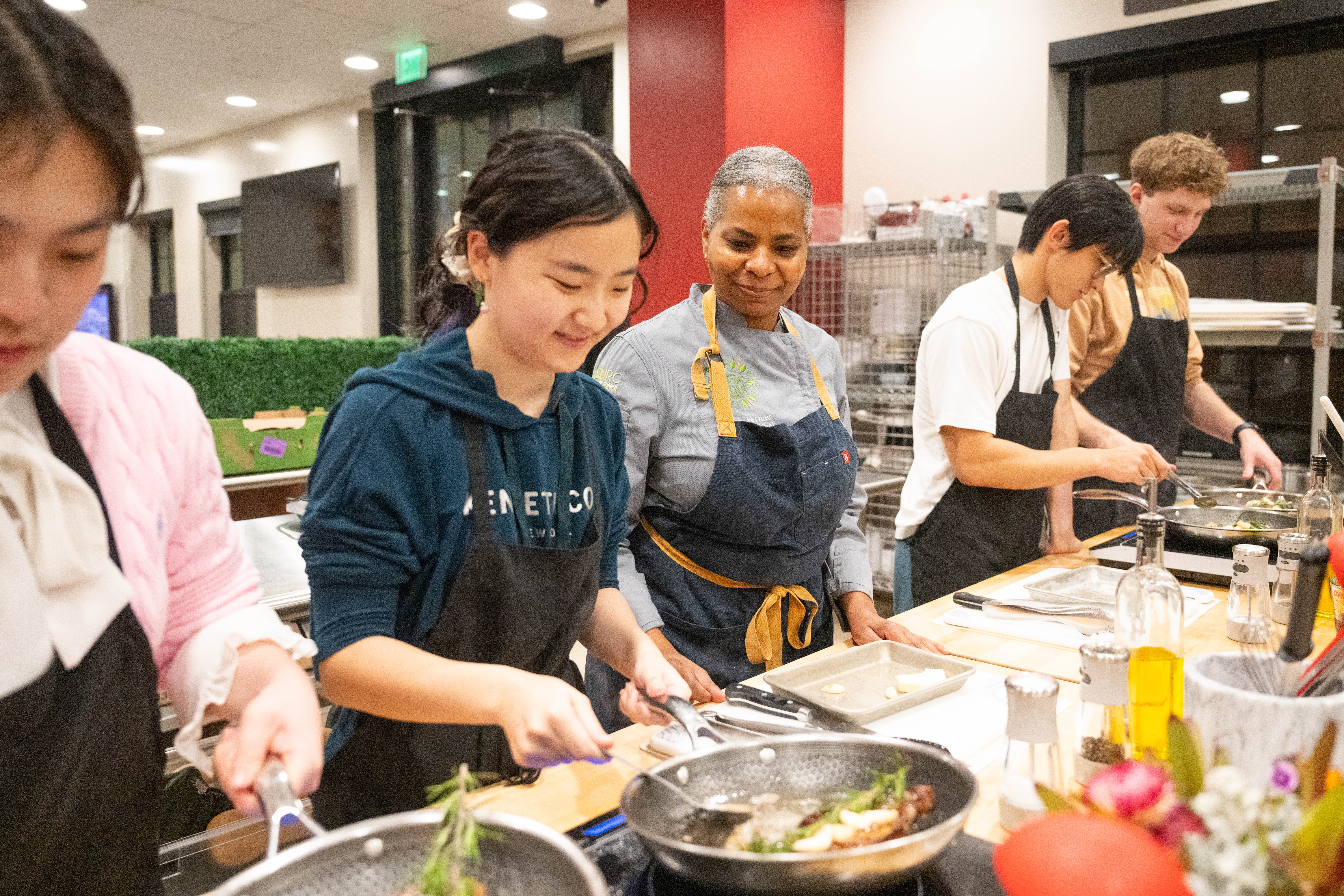
Residential & Dining Enterprises (R&DE) is advancing climate action where daily habits take shape: the kitchen.

The R&DE Teaching Kitchen is a hands-on learning environment that equips students with practical skills in plant-forward cooking, sustainable meal planning, and food waste prevention. As part of R&DE’s broader commitment to sustainable food systems, the Teaching Kitchen also serves as a collaborative platform that brings together faculty partners, the O’Donohue Family Stanford Education Farm, and academic programs.

Through this interdisciplinary model, R&DE connects culinary skill-building to research, nutrition science, and broad food-systems learning. More than 5,000 students, along with thousands of faculty and staff, have participated in this living-lab experience, gaining tools to make more sustainable food choices and strengthening habits that support both personal well-being and planetary health.