
Grounds Operations
Over 37,000 trees with 32% canopy coverage and 52%+ electric grounds equipment support campus cooling, air quality, and climate resilience
Stanford manages its landscapes with long-term reliability and ecological stewardship, building on Frederick Law Olmsted’s original principles for climate-appropriate, low-water plantings and cohesive campus design. The university is refining its future plant palette so landscapes can perform well under warmer, drier conditions while sustaining habitat value and campus character.
Grounds operations account for less than 1% of Stanford’s Scope 1 mobile emissions from gasoline-powered equipment, but they play a critical role in advancing climate adaptation and environmental stewardship. Initiatives such as smart irrigation systems, integrated pest management, organic landscape pilots, and the transition to electric equipment demonstrate how sustainable grounds practices can reduce emissions, conserve water, and improve ecosystem health. These efforts ensure Stanford’s landscapes remain climate-ready, low-impact, and biodiverse as the campus continues to evolve.
Organic Landscape Pilot
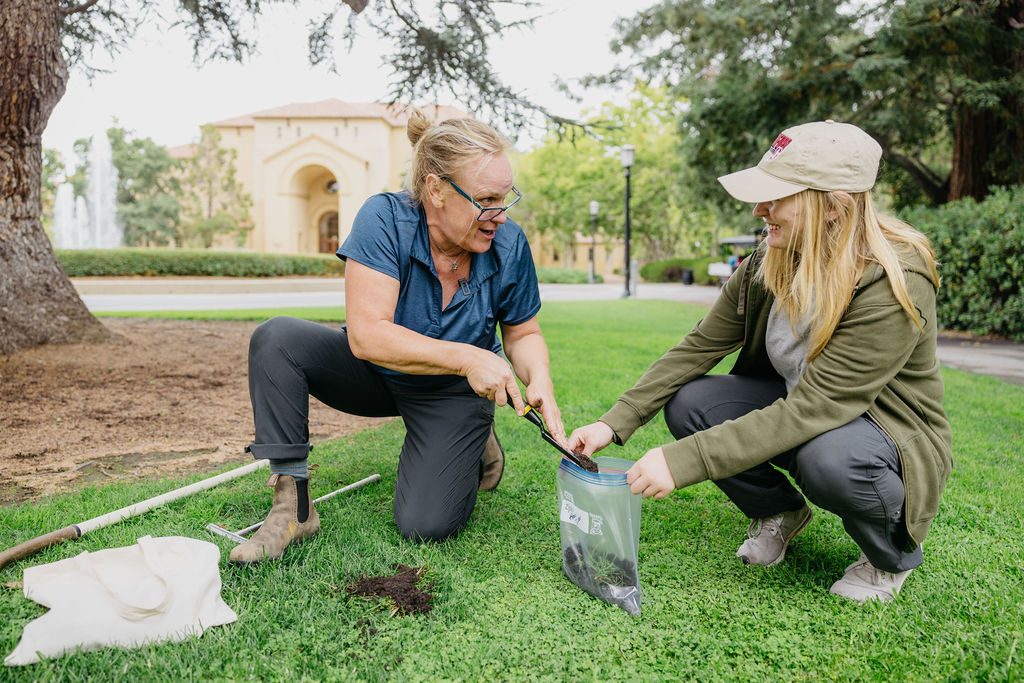
Stanford is advancing sustainable landscape practices by piloting organic land management strategies across select campus sites. These pilots aim to reduce reliance on synthetic pesticides and herbicides, improve soil and ecosystem health, and enhance human and environmental safety.
These strategies are part of a broader effort to document existing practices, build cross-departmental partnerships, and evaluate scalable approaches to organic land care. The pilot program leverages external expertise and student engagement to position Stanford as a living laboratory for sustainable groundskeeping and serves as a model for reducing chemical inputs while maintaining high-performance landscapes.