Energy Systems

82% reduction in Scope 1 & 2 emissions from 2011 peak, driven primarily from Stanford’s energy systems

Stanford’s Central Energy Facility (CEF) provides chilled and hot water to campus buildings through a heat recovery system that captures waste heat from chilled water to meet up to 88% of campus heating needs. The facility is predominantly run on electricity, using natural gas only when recovered heat is insufficient in the peak of winter. Large thermal storage tanks help balance energy use throughout the day and improve efficiency.

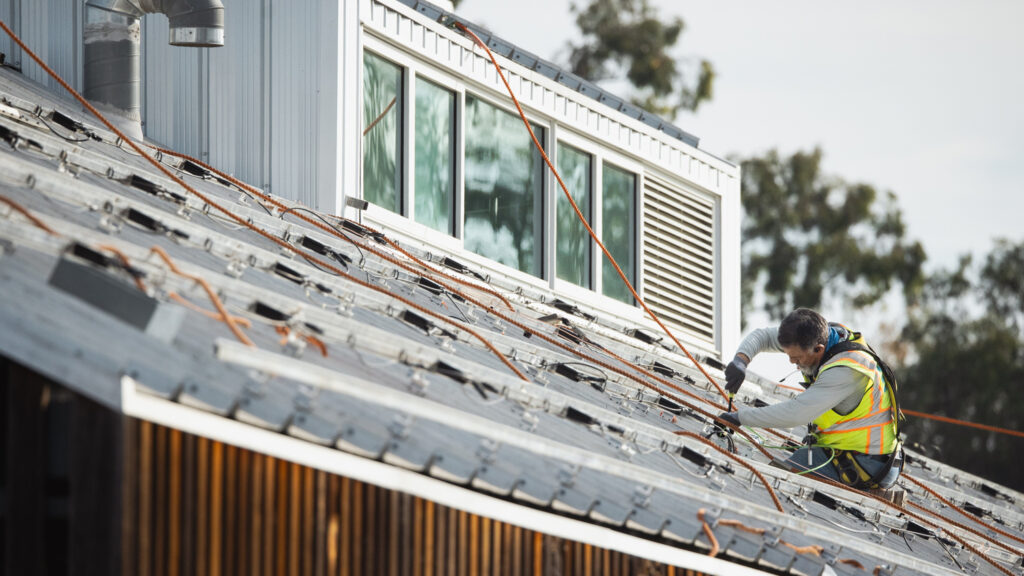
Stanford purchases renewable electricity credits to to achieve 100% renewable electricity through long-term solar power purchase agreements, rooftop solar systems, and renewable energy credits.

To further mitigate emissions, Stanford is enhancing its energy infrastructure by expanding the Central Energy Facility that will increase the CEF’s ability to take on additional loads, grid and transmission upgrades that will support additional electrification and reliability, and innovations in energy storage and load flexibility.

Stanford’s Central Energy Facility (CEF) transformed campus heating and cooling with a first-of-its-kind sustainable, cost-efficient, thermal energy system using heat recovery technology and thermal storage tanks. Since becoming operational in 2015, the CEF alone has reduced campus GHG emissions by 50%, has saved 18% in domestic water use, and is projected to pay back $520 million over 35 years.

Mitigation
Resilience
completed

To support a growing campus, the facility will expand heating and cooling capacity and heat recovery to serve a 33% increase in demand, while nearly eliminating the need for natural gas. Once the expansion is operational, it will supply 99.9% of heating loads from recovered energy, avoiding 14,500 MTCO₂e annually and improving resilience to climate-related grid stress.

Mitigation
Resilience
planned

Stanford reached 100% renewable electricity in 2023 through two long-term solar power purchase agreements, 11 rooftop solar installations, and renewable energy credits. This achievement reduced Scope 1 and 2 emissions by 39% from 2011 levels and marked a final milestone in the university’s transition to clean energy procurement. Future efforts will focus on aligning hour-by-hour use with renewable generation for true 24/7 carbon-free operation.

Mitigation
completed

Stanford’s two solar power purchase agreements—Stanford Solar Generating Stations (SSGS) #1 and #2—supply most of the campus renewable energy credits. SSGS1 (2016) uses single-axis tracking to maximize generation in California’s Central Valley. SSGS2 (2022) added a 50-megawatt battery system to store solar energy for evening demand, enabling Stanford’s 100% renewable electricity achievement.

Mitigation
completed

Stanford analyzed hourly energy use across major building types to assess progress toward 24/7 carbon-free electricity. Results show that approximately 40% of campus electricity demand is already aligned with clean energy on an hourly basis, reflecting strong integration of solar and battery resources. Remaining emissions are concentrated in early morning and winter evening hours, when clean energy is limited. Stanford will explore demand flexibility, load shifting, and expanded clean energy resources to better align energy use with carbon-free supply.

Mitigation
planned

Since 2024, Stanford has been upgrading equipment that distributes electricity across campus to improve reliability, resilience, and capacity, paving a path towards more reliable opportunities for building and vehicle electrification.

Resilience
in-progress

Stanford is conducting a transmission system study to enhance the reliability and capacity of campus transmission lines. As part of the effort to improve transmission line reliability, the university launched the Power Smart campaign to reduce electricity use on hot days between 12 and 8 p.m., helping to ease stress on transmission infrastructure and lower emissions during peak hours.

Resilience
Mitigation
in-progress

Stanford is committed to advancing the global clean energy transition through knowledge sharing, offering both staff-guided and self-guided tours of the Central Energy Facility, which has welcomed more than 15,000 visitors. Additionally, Stanford’s energy efficiency learning hub provides resources to share lessons from the university’s energy transition and inspire industry adoption.

Mitigation
ongoing

Stanford develops a skilled workforce to support the transition to sustainable, energy-efficient infrastructure—training electricians, maintenance mechanics, and other technical staff who help implement and maintain the university’s low-carbon energy systems.

Mitigation
Resilience
ongoing

Stanford is researching the feasibility of using battery storage to replace traditional diesel-fueled emergency generators on campus.

Mitigation
ongoing

Electrifying the Farm

A new solar-powered microgrid—including solar panels, EV chargers, and battery storage—at the O’Donohue Family Stanford Educational Farm meets onsite energy needs while providing students with hands-on experience in agroecology, energy systems, and the clean-energy transition.